

Kaixo,
Victoria from Techpoint here,
Here’s what I’ve got for you today:
- Google withdraws court battle as Uganda forces compliance
- How Interswitch shaped one founder’s tech DNA
- Tanzania gets phone-tap payments via M-Pesa
Google withdraws court battle in Uganda

Word on the block is that Google has quietly pulled out of a major legal fight in Uganda. The big tech withdrew its appeal against a landmark ruling by the country’s regulator, the Personal Data Protection Office (PDPO), and accepted the obligations laid out under the ruling. Under the 2025 decision, Google was found to be operating in Uganda without proper registration as a “data controller” and transferring Ugandans’ personal data abroad without meeting required local safeguards.
The original verdict ordered Google to register with the PDPO, appoint a Uganda-based Data Protection Officer, and present a compliant framework for cross-border transfers. By ending its appeal, Google is effectively saying it will comply with these demands, signalling that Uganda’s data-privacy laws apply, even to global tech giants.
This flip matters far beyond just one company. With increased enforcement across Africa, regulators are showing they’re serious about safeguarding citizens’ digital rights. Uganda isn’t alone: countries like Nigeria have likewise cracked down on big tech. For example, the Nigerian Data Protection Commission (NDPC) fined Meta in 2025 for alleged violations related to behavioural advertising, a sign that privacy enforcement is becoming a continental trend.
For everyday Internet users in Uganda, this could translate into stronger protections: more oversight over how their data is used, stricter control over data exports, and a more accountable digital ecosystem. And for tech companies, the move reminds global platforms that operating in African markets comes with obligations, not just opportunities.
As regulators continue to flex their muscles and hold big tech to local standards, this development may shape how digital platforms operate across the continent.
How Interswitch shaped one founder’s tech DNA

Unyime Tommy didn’t stumble into tech; she grew up inside it. From her mum’s business centre to the computer labs in her secondary school, technology was the backdrop of her childhood. That early exposure later pushed her to ditch the family expectation of studying medicine and instead choose Information and Communication Technology at Covenant University. It wasn’t the typical path, but it was the one that made sense to her.
Her journey took a bigger turn during the National Youth Service Corps (NYSC) when she landed at the National Information Technology Development Agency of Nigeria (NITDA), working on a project that deployed computer labs across local governments. That was where she first realised she didn’t need to write code to belong in tech. She understood systems, processes and people, and that was enough to spark a career. By the time she joined Interswitch as a QA professional, a role no university was teaching at the time, she was ready to learn everything on the job.
Interswitch became her bootcamp. The company was transitioning fully into Scrum, and Tommy had to wear every hat possible: QA, Scrum Master, Program Manager, and Product Manager. Those years shaped her into a product delivery specialist, someone who could guide teams from idea to deployment without flinching. She didn’t just rise through the ranks; she built the foundation for something bigger.
That “something bigger” became Assurdly, her product delivery company. What started as a response to startups struggling to hire complete teams quickly grew into a lifeline for companies of all sizes. Whether it’s product managers, QAs, engineering leads, or an entire delivery squad, Assurdly steps in so teams can focus on serving their customers while still innovating. Today, four- to seven-year-old companies and even large enterprises rely on her team to build fast, experiment, and stay competitive.
From a mum’s business centre to running a company that ships products for brands across Africa, Tommy’s story is a reminder that tech isn’t just about coding, it’s about access, people, and execution. Find out how tech has shaped her work and life in Delight’s latest edition of After Hours.
Tanzania gets phone-tap payments via M-Pesa
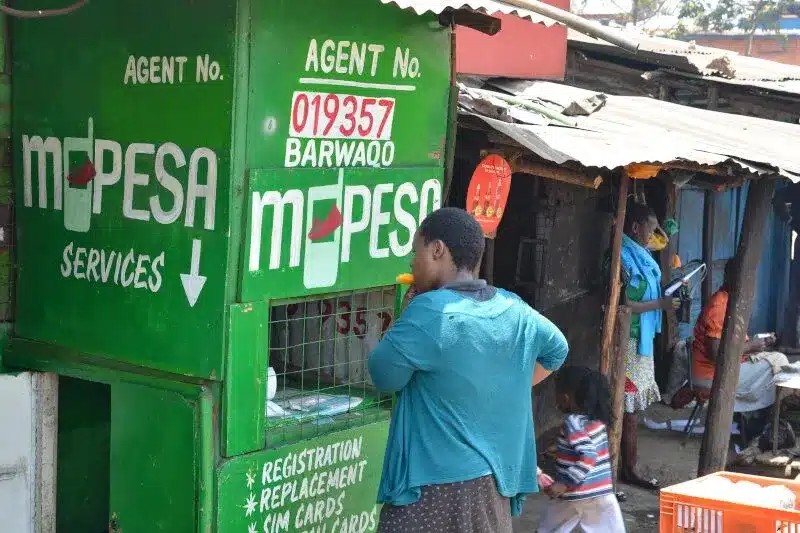
Vodacom Tanzania is shaking up mobile money again, but this time with M-Pesa Global Payment, a new bundle of international payment features that let its 22 million users pay merchants in China, Dubai, Uganda, and anywhere Visa is accepted straight from their phones. It’s rolling out through partnerships with Visa, Alipay, MTN Uganda, Network International, Magnati, and TerraPay. Basically, all the major players powering trade routes used by Tanzanian consumers and SMEs.
At its core, the update does one thing: it turns M-Pesa into a global payments tool. Users can now pay Chinese merchants via Alipay, settle directly into MTN MoMo wallets in Uganda, and tap to pay at Visa-enabled terminals worldwide using a virtual Visa card generated inside the M-Pesa app. For Tanzania, a country that imported over $860 million worth of goods from China last year, this is a game-changer for traders who often rely on risky cash arrangements or expensive middlemen.
The standout feature is M-Pesa Tap & Pay, Africa’s first phone-based contactless payment system powered by Visa tokenisation. Instead of a plastic card, users simply tap their phone on any Visa terminal globally. It’s M-Pesa’s biggest push yet to blur the line between mobile money and traditional banking tools, a trend already visible across East Africa as telcos modernise mobile money platforms.
What’s driving this? Cross-border payments in the region are still slow, fragmented, and costly. SMEs moving goods between Tanzania, Uganda, Kenya, China, and the UAE have long complained about settlement delays and exchange-rate surprises. Vodacom’s bet is that since M-Pesa already dominates Tanzania’s financial system, extending it to international trade will give millions of users a familiar, regulated way to transact across borders.
If this takes off, Tanzania could jump a few steps ahead in Africa’s digital commerce game. And for merchants across China’s wholesale markets or Uganda’s border towns, it could mean faster settlements and simpler trade flows. As Vodacom’s M-Pesa boss put it, the goal is to “open new trade corridors” and give ordinary users a seat in the global digital economy.
In case you missed it
What I’m watching
Opportunities
- Moniepoint is hiring for over 100 roles. Apply here.
- IHS Towers is hiring a Health, Safety & Environment (HSE) Analyst. Apply here.
- Western Union is looking for a Business Development Associate, Junior, North and Anglophone West Africa based in Lagos, Nigeria. Apply here.
- MTN is hiring a Specialist, Commercial Planning and Analytics, Commercial, at Victoria Island, South West Region, Nigeria. Apply here.
- FairMoney is hiring a Golang Backend Engineer. Apply here.
- M-KOPA is recruiting a Director of Product Design. Apply here.
- Standard Bank Group logo is hiring a Team Lead, Northwest 1 & 2. Apply here.
- We’re hosting a debate on AI in daily life. Join us to share your insights and perspectives.
- Techpoint Africa is creating a video series where people discuss and debate policies and current events. If you enjoy thoughtful conversations, fill out this form. Apply here.
- Are you building a startup can feel isolating, but with Equity Merchants CommunityConnect? You can network with fellow founders, experts, and investors, gaining valuable insights and exclusive resources to help you grow your business. Click here to join.
- Help us make Techpoint better for you! Your feedback shapes what comes next (your responses may potentially save my job. A bit dramatic, but still). It will only take 30 seconds to tell us what works and what doesn’t. Fill it here.
- To pitch your startup or product to a live audience, check out this link.
- Have any fresh products you’d like us to start selling? Check out this link here.
- Follow Techpoint Africa’s WhatsApp channel to stay on top of the latest trends and news in the African tech space here.
Have a productive week!
Victoria Fakiya for Techpoint Africa


