

As the world prepares for the most expansive FIFA World Cup in history, music icons Burna Boy and Shakira have ignited global anticipation with a magnetic anthem that fuses football, culture, luxury travel, and contemporary global spectacle.
By Mohammad A. Aliu
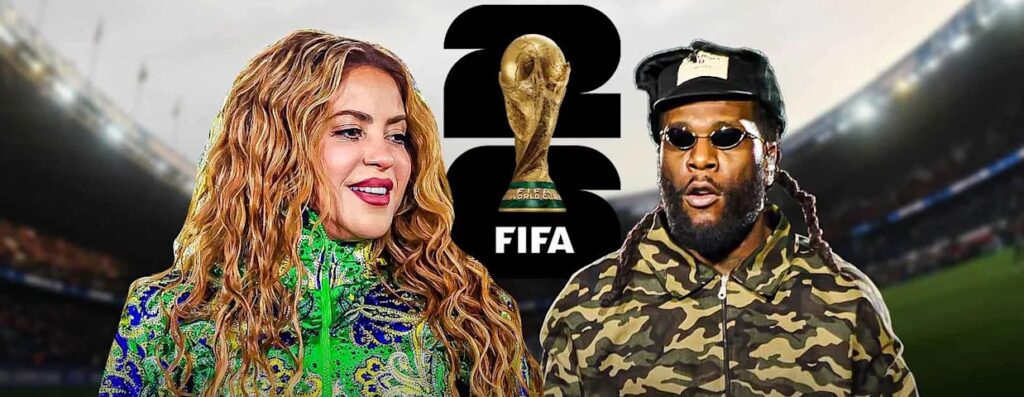
There are moments when sport transcends the boundaries of competition and becomes something larger; a theatre of emotion, identity, rhythm, and spectacle. The FIFA World Cup has always belonged to that rare realm. Yet as the world turns its gaze toward the 2026 edition of football’s grandest festival, it is music that has provided the tournament with its first truly unforgettable moment.
With the release of Dai Dai, the newly unveiled anthem featuring Colombian global icon Shakira and Nigerian Afrofusion phenomenon Burna Boy, the countdown to the 2026 FIFA World Cup has begun not with a whistle, but with a pulse. Sultry, rhythmic, and unmistakably global in texture, the song signals the arrival of a World Cup designed for a new era; borderless, multicultural, commercially expansive, and emotionally resonant.
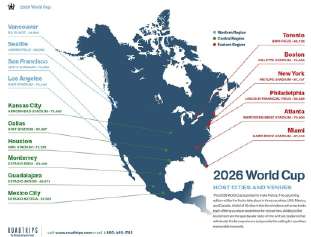
Set to be hosted across three nations: Canada, United States, and Mexico; the 2026 Mundial already promises scale unlike anything football has witnessed before. It will be the largest FIFA World Cup ever staged, stretching across vast geographies, cultures, and time zones. More than a sporting event, it is poised to become a continental carnival of movement, tourism, entertainment, and commerce.
And fittingly, FIFA has entrusted its emotional soundtrack to two artists whose music similarly transcends borders.

For Shakira, the return feels almost mythic. Few World Cup songs have attained the cultural immortality of Waka Waka (This Time for Africa), the anthem of the 2010 FIFA World Cup in South Africa. More than a hit single, it became a global ritual; played in stadiums, beach bars, luxury hotels, airport lounges, and city squares from Johannesburg to Rio de Janeiro. Fifteen years later, Shakira returns not merely as a pop star, but as a custodian of football nostalgia itself.
z
Yet Dai Dai belongs equally to Burna Boy, whose rise from Lagos prodigy to international cultural statesman has become one of contemporary music’s most compelling stories. If the 2022 World Cup soundtrack Hayya Hayya introduced Nigerian sonic influence to football’s global stage through Davido, Burna Boy’s inclusion in the 2026 anthem represents something even more consequential: the full arrival of African popular culture at the centre of global entertainment diplomacy.
Few artists today embody cosmopolitan modern Africa quite like Burna Boy. His sound moves fluidly between Afrobeats, reggae, hip-hop, dancehall, and soul, carrying with it the swagger of Lagos nightlife and the emotional cadence of African storytelling. Over the last several years, he has become a recurring presence at elite global sporting spectacles; from the UEFA Champions League Final to the NBA All-Star Game, and the celebratory events surrounding England’s triumph at the UEFA Women’s Euro Championship.
In many ways, his collaboration with Shakira feels inevitable. Both artists possess an instinctive understanding of movement: musical movement, cultural movement, human movement. Their partnership reflects the very spirit of the 2026 World Cup itself: a tournament defined by migration, connection, diaspora, and shared celebration.
The commercial dimensions of the competition are equally staggering. FIFA has already indicated that participating nations will share a remarkable prize pool of approximately $871 million, making this the most financially rewarding World Cup in history. Even qualification now carries unprecedented value, with teams reportedly receiving over $11 million simply for participating. The economics of football have never appeared more expansive.
But beyond the numbers lies something more seductive: the travel experience the tournament will create. Few sporting events possess the power to transform entire continents into interconnected cultural corridors. Over the course of several weeks, supporters will drift from the cosmopolitan glamour of New York and Los Angeles to the colonial romance of Mexico City, from the architectural sophistication of Toronto to the electric nightlife of Miami. Airports will become catwalks of national colours. Luxury hotels will pulse with multilingual conversation. Rooftop bars, coastal resorts, and Michelin-starred restaurants will host spontaneous encounters between strangers united by football.
And through it all, Dai Dai will likely become the…